content
Overview
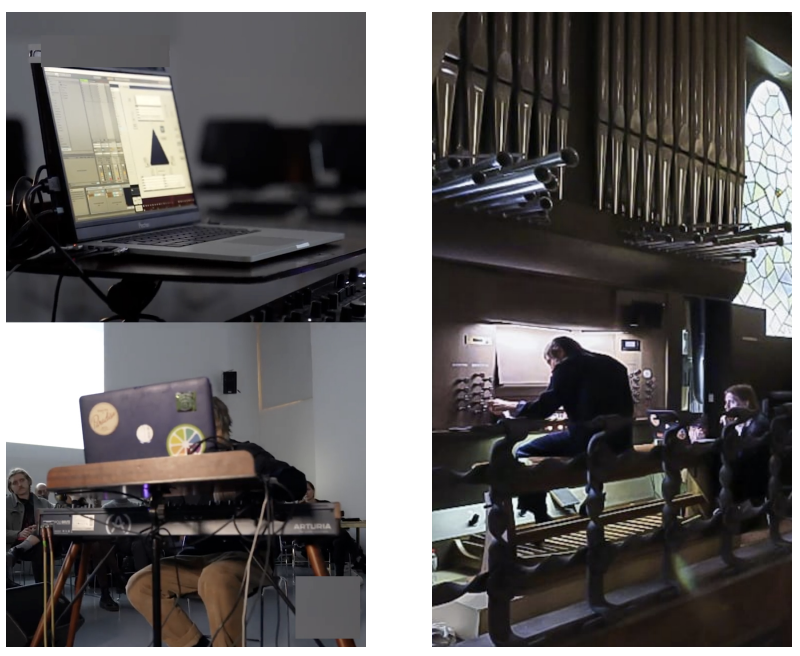
A live performance involving the GrooveTransformer Eurorack module.
This performance was part of the +RAIN 2023 festival held in Barcelona.
More about the programTechnical Resources
The GrooveTransformer is a generative sequencer developed by Nicholas Evans and me.
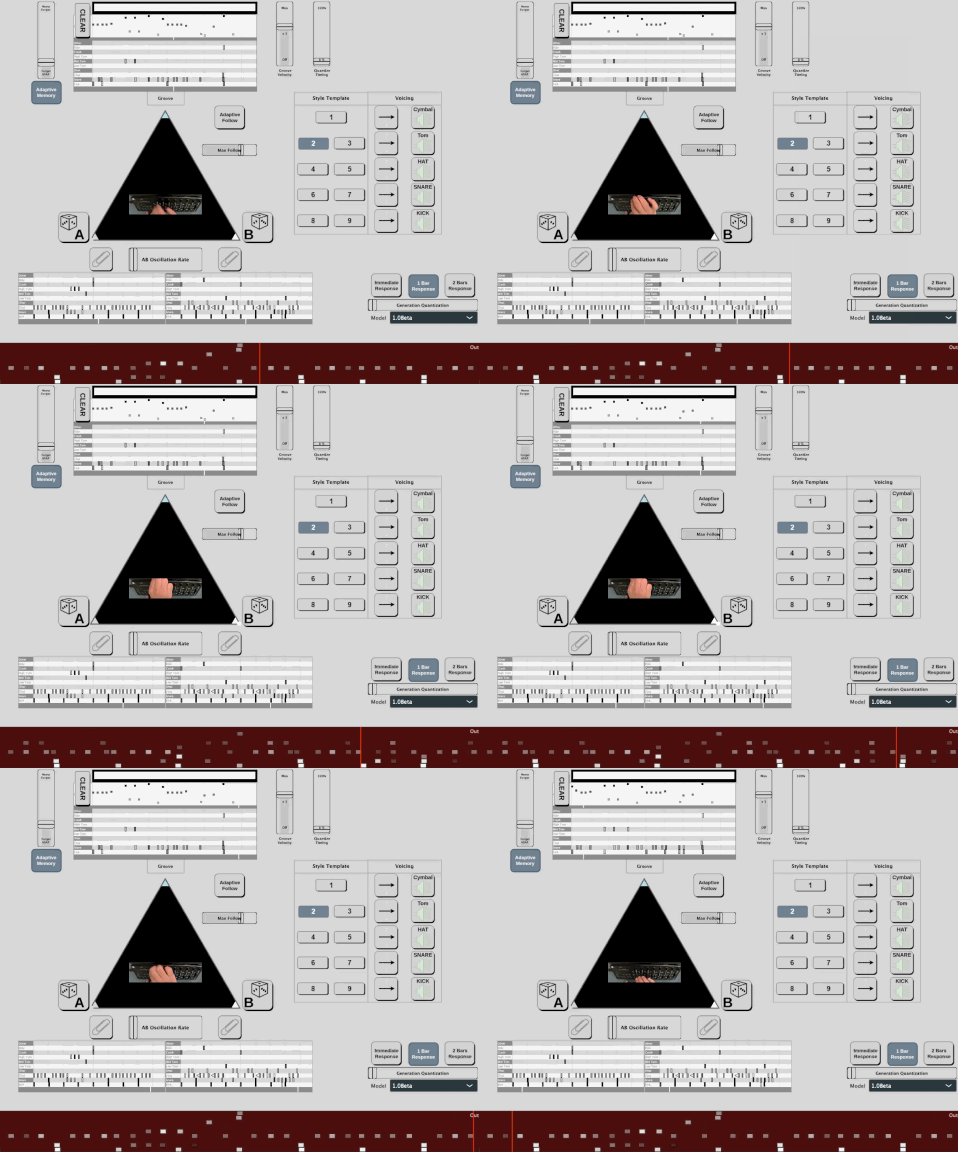
The GrooveTransformer is available openly as a plugin. Read more about the software version here:
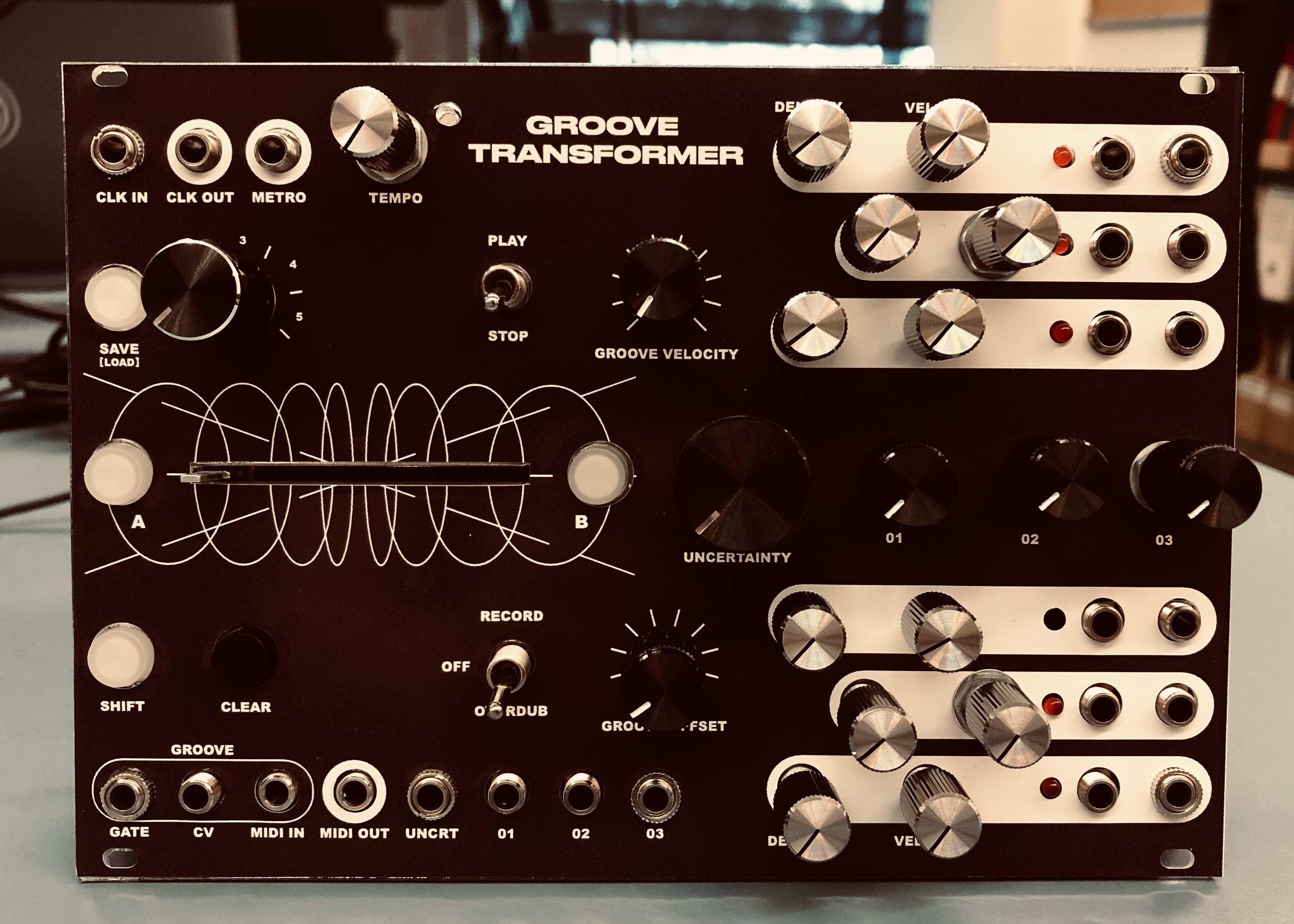
A Eurorack hardware version of it has also been developed by us, which was used in the performance. Read more about the hardware version here:
Publications
We’ve had a few publications involving the eurorack module. You can find them here:
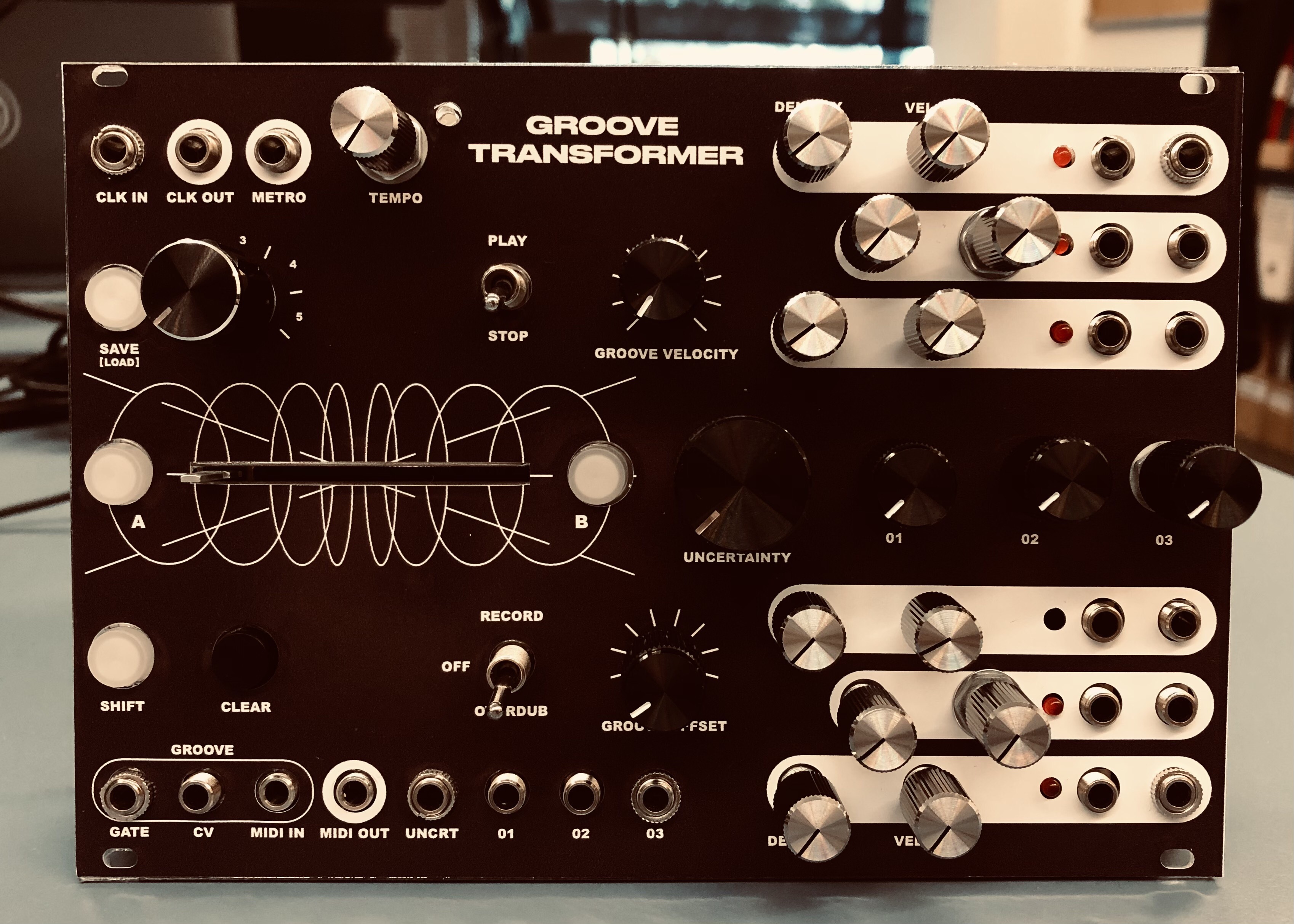
GrooveTransformer: A Generative Drum Sequencer Eurorack Module
* Equal contribution
Proceedings of the International Conference on New Interfaces for Musical Expression (NIME) · 2024Abstract
This paper presents the GrooveTransformer, a Eurorack module designed for generative drum sequencing. Central to its design is a Variational Auto-Encoder (VAE), around which we have designed a deployment context enabling performance through accompaniment and/or user interaction. This module allows the user to use the system as an accompaniment generator while interacting with the generative processes in real-time. In this paper, we review the design principles and technical architecture of the module, while also discussing the potentials and short-comings of our work.
BibTeX
@inproceedings{Haki2024GrooveTransformer,
  author = {Evans, Nicholas and Haki, Behzad and Jorda, Sergi},
  booktitle = {Proceedings of the International Conference on New Interfaces for Musical Expression (NIME)},
  year = {2024},
  month = sep,
  publisher = {NIME},
  title = {{GrooveTransformer: A Generative Drum Sequencer Eurorack Module}},
}
Exploring Situated Stabilities of a Rhythm Generation System Through Variational Cross-Examination
* Equal contribution
Proceedings of the 6th Conference on AI Music Creativity (AIMC) · 2025Abstract
This paper investigates GrooveTransformer, a real-time rhythm generation system, through the postphenomenological framework of Variational Cross-Examination (VCE). By reflecting on its deployment across three distinct artistic contexts, we identify three stabilities: an autonomous drum accompaniment generator, a rhythmic control voltage sequencer in Eurorack format, and a rhythm driver for a harmonic accompaniment system. The versatility of its applications was not an explicit goal from the outset of the project. Thus, we ask: how did this multistability emerge? Through VCE, we identify three key contributors to its emergence: the affordances of system invariants, the interdisciplinary collaboration, and the situated nature of its development. We conclude by reflecting on the viability of VCE as a descriptive and analytical method for Digital Musical Instrument (DMI) design, emphasizing its value in uncovering how technologies mediate, co-shape, and are co-shaped by users and contexts.
BibTeX
@inproceedings{kotowski_2025_16946740,
  author = {Kotowski, Błażej and Evans, Nicholas and Haki, Behzad and Font, Frederic and Jordà, Sergi},
  title = {{Exploring Situated Stabilities of a Rhythm Generation System Through Variational Cross-Examination}},
  month = sep,
  year = {2025},
  doi = {10.5281/zenodo.16946740},
  url = {https://doi.org/10.5281/zenodo.16946740},
  address = {Brussels, Belgium},
  booktitle = {{Proceedings of the 6th Conference on AI Music Creativity (AIMC)}},
}