content
Overview
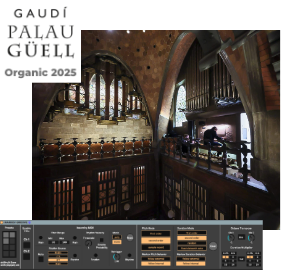
In November 2024, Raül Refree gave an improvised performance on the MIDI-enabled pipe organs of Palau Güell, Antoni Gaudí’s landmark building in Barcelona, as part of the Organic concert series.
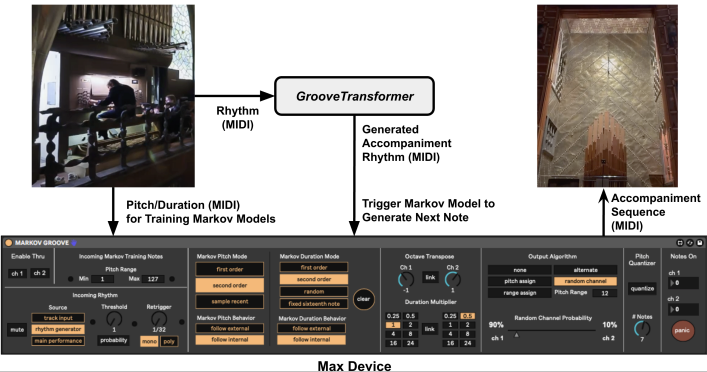
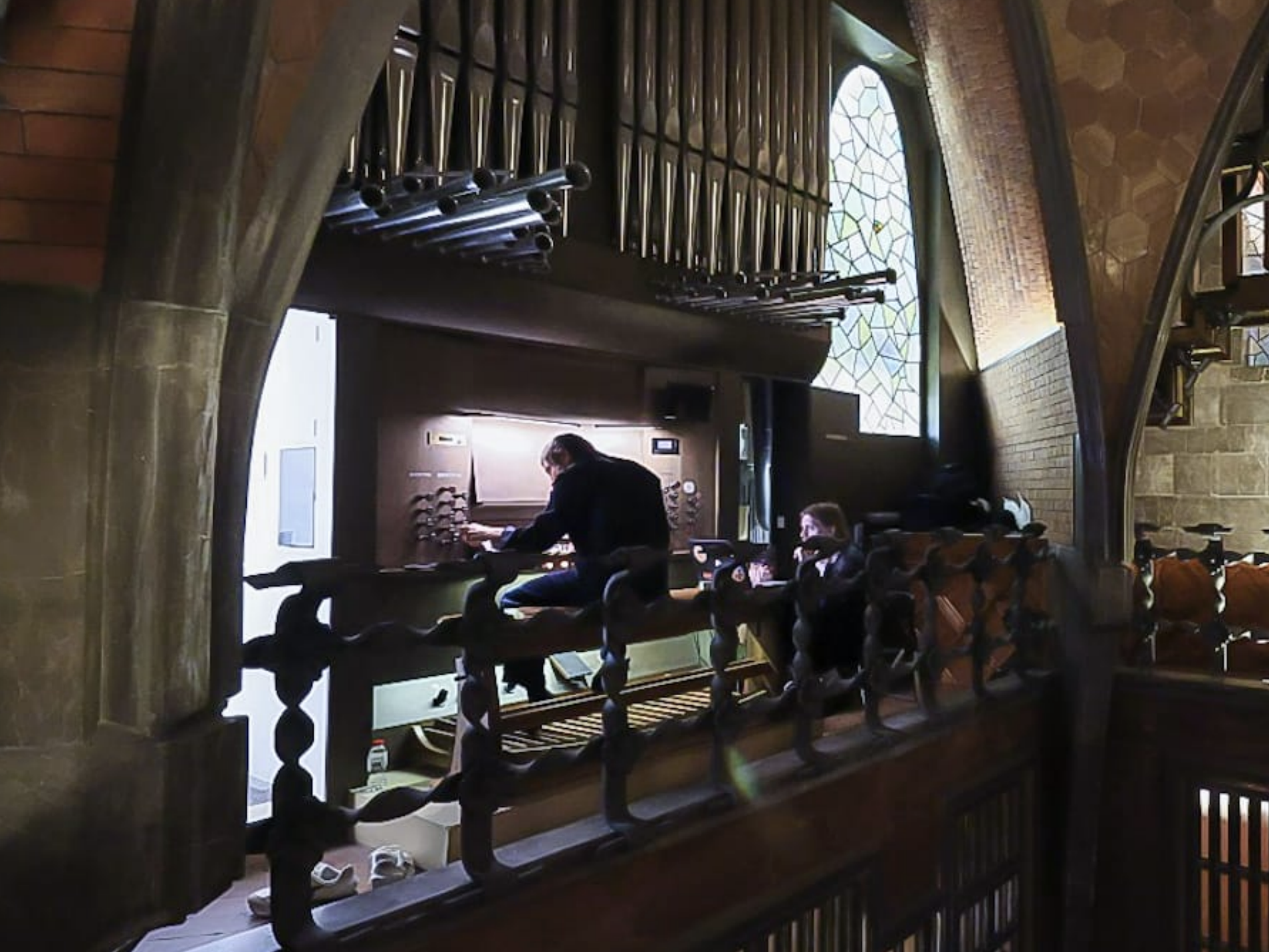
Refree played the venue’s main organ from the third floor, out of sight of the audience, while two portable organs played back accompaniments generated in real time. To turn our rhythm-only system into one that could produce harmonic material, we paired the GrooveTransformer with a Markov-based Max device trained live on Refree’s playing. The GrooveTransformer generated the accompaniment rhythms, and each onset triggered the Markov models to choose the next pitch and note duration. No pre-composed material was used, so the accompaniment reflected only what was improvised in the moment. Nicholas Evans supervised the system during the performance, shaping its density, transposition and note durations.
Technical Resources
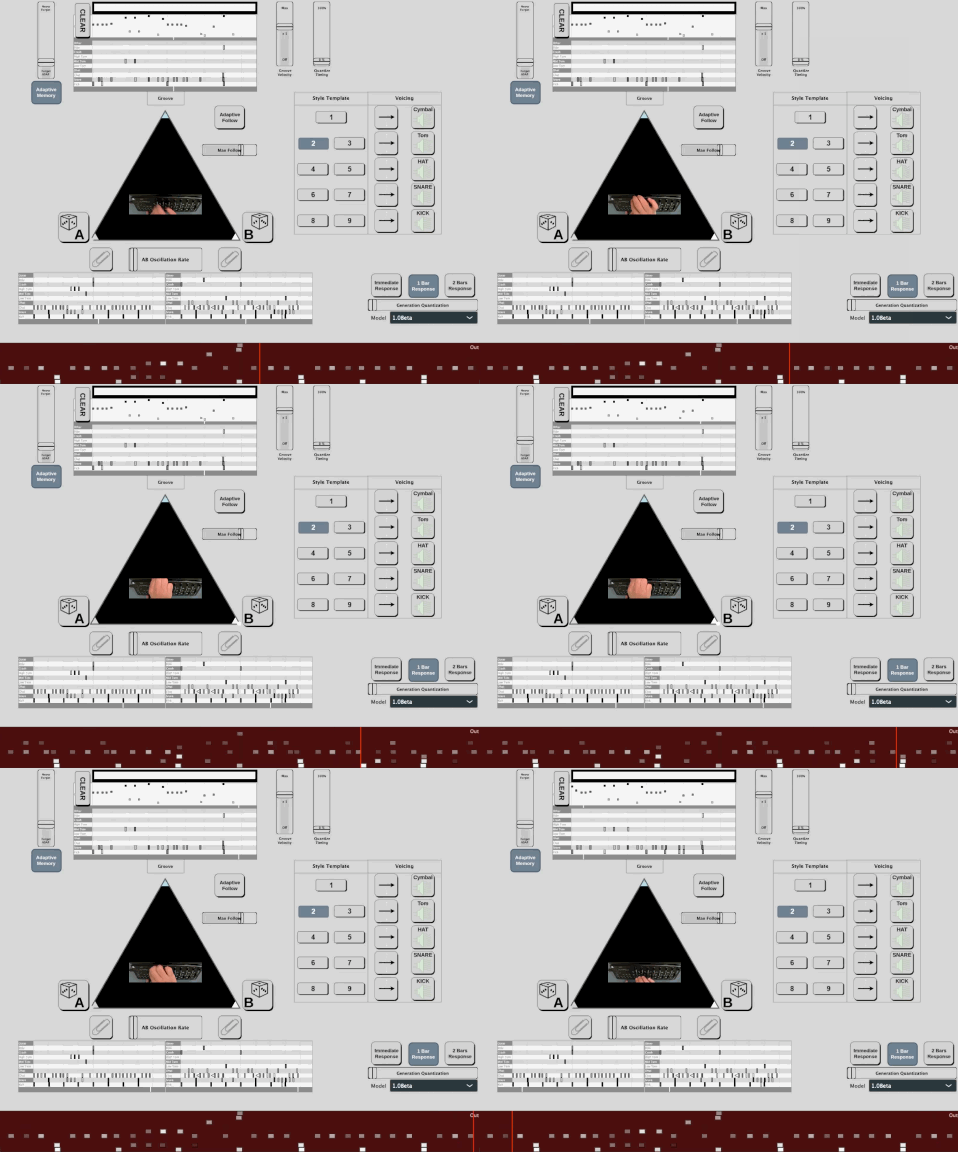
The rhythmic accompaniment was generated by the GrooveTransformer plugin, developed by Nicholas Evans and me. Read more about the plugin here:
The harmonic content and note durations were generated by the Markov Accompaniment Patch, a Max device we developed for this performance. Read more about it here:
Publications
We wrote a paper about the development of this performance, which you can read here:
Repurposing a Rhythm Accompaniment System for Pipe Organ Performance
* Equal contribution
Proceedings of the International Conference on New Interfaces for Musical Expression (NIME) · 2025Abstract
This paper presents an overview of a human-machine collaborative musical performance by Raül Refree utilizing multiple MIDI-enabled pipe organs at Palau Güell, as part of the Organic concert series. Our earlier collaboration focused on live performances using drum generation systems, where generative models captured rhythmic transient structures while ignoring harmonic information. For the organ performance, we required a system capable of generating harmonic sequences in real-time, conditioned on Refree’s performance. Instead of developing a comprehensive state-of-the-art model, we integrated a more traditional generative method to convert our pitch-agnostic rhythmic patterns into harmonic sequences. This paper details the development process, the creative and technical considerations behind the final performance, and a reflection on the efficacy and adaptability of the chosen methodology.
BibTeX
@inproceedings{nime2025_16,
  address = {Canberra, Australia },
  articleno = {16},
  author = {Evans, Nicholas and Haki, Behzad and Jordà, Sergi},
  booktitle = {Proceedings of the International Conference on New Interfaces for Musical Expression (NIME)},
  doi = {10.5281/zenodo.15698807},
  issn = {2220-4806},
  month = jun,
  numpages = {5},
  pages = {116--120},
  title = {{Repurposing a Rhythm Accompaniment System for Pipe Organ Performance}},
  track = {Paper},
  year = {2025},
}